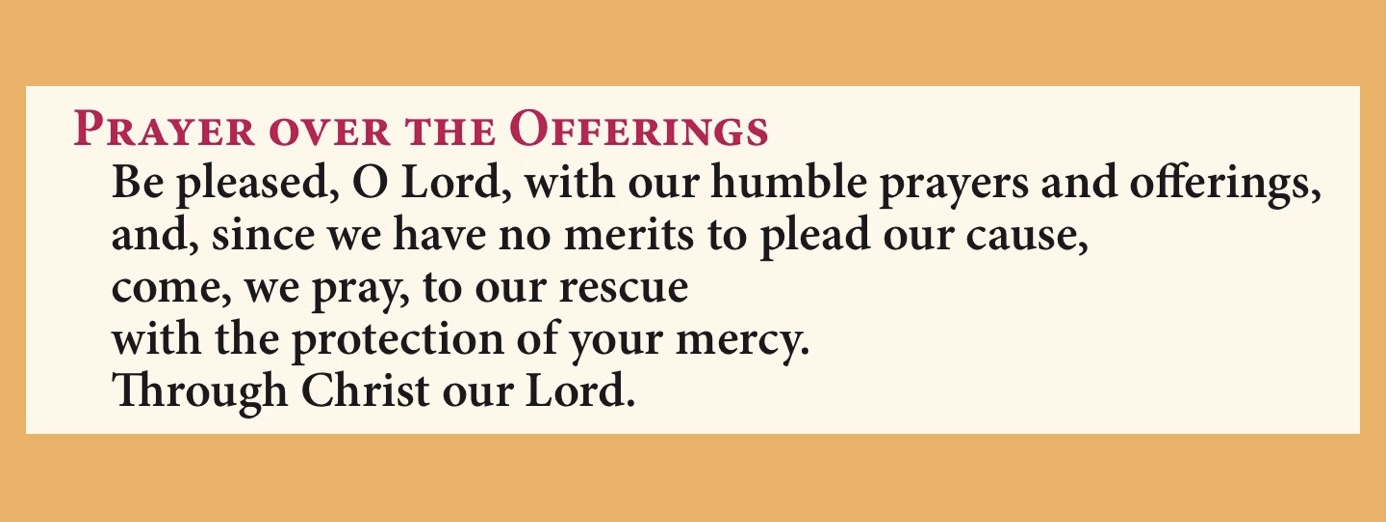
Measuring the scope of global violence today should cause us all to pray and work for peace, begging that Jesus the Prince of Peace will save us from our own sins, from the violence and/or negligence of our own hearts, and draw us to follow Him in the ways of peace in the environments in which we live, in our families and our communities. In as much as we are able in our own given circumstances, we can be “peacemakers.” We can carry out the works of mercy, remembering those who suffer throughout the world, uniting ourselves to Christ’s redeeming love for the conversion of hearts from the many sins that lead to war, and to bring healing to our broken world.
In the first segment of his address (quoted below in italics), the Pope indicates various ongoing conflicts and areas of ongoing danger throughout the world: in Europe since the invasion of Ukraine last February, and also in the Middle East, South Sudan, the Democratic Republic of the Congo, West Africa, Ethiopia, Yemen, and East Asia—especially Myanmar and the increasing tensions on the Korean Peninsula.
As the 60th anniversary of Saint John XXIII’s encyclical Pacem in Terris draws near, we should entrust our war-torn world to the Heart of Jesus whose love is greater than our sins and the sins of the world.
Here is the excerpt from Pope Francis’s address:
“Today the third world war is taking place in a globalized world where conflicts involve only certain areas of the planet directly, but in fact involve them all. The closest and most recent example is certainly the war in Ukraine, with its wake of death and destruction, with its attacks on civil infrastructures that cause lives to be lost not only from gunfire and acts of violence, but also from hunger and freezing cold. For its part, the conciliar Constitution Gaudium et Spes states that ‘every act of war directed to the indiscriminate destruction of whole cities or vast areas with their inhabitants is a crime against God and humanity which merits firm and unequivocal condemnation’ (No. 80). Nor can we forget that war particularly affects those who are most fragile—children, the elderly, the disabled—and leaves an indelible mark on families. Today, I feel bound to renew my appeal for an immediate end to this senseless conflict, whose effects are felt in entire regions, also outside of Europe, due to its repercussions in the areas of energy and food production, above all in Africa and in the Middle East.
“The present third world war fought piecemeal also makes us consider other theatres of tension and conflict. Once more this year, with immense sorrow, we must look to the war-torn land of Syria. The rebirth of that country must come about through needed reforms, including constitutional reforms, in an effort to give hope to the Syrian people, affected by growing poverty, while at the same time ensuring that the international sanctions imposed do not affect the daily life of a people that has already suffered so much.
“The Holy See also follows with concern the increase of violence between Palestinians and Israelis, sadly resulting in a number of victims and complete mutual distrust. Jerusalem, a holy city for Jews, Christians and Muslims, is particularly affected by this. The name Jerusalem evokes its vocation to be a city of peace, but sadly, it has become a theatre of conflict. I trust that it can rediscover this vocation to be a location and a symbol of encounter and peaceful coexistence, and that access and liberty of worship in the holy places will continue to be guaranteed and respected in accordance with the status quo. At the same time, I express my hope that the authorities of the State of Israel and those of the State of Palestine can recover the courage and determination to dialogue directly for the sake of implementing the two-state solution in all its aspects, in conformity with international law and all the pertinent resolutions of the United Nations.
“As you know, at the end of the month, I will at last be able to go as a pilgrim of peace to the Democratic Republic of the Congo, in the hope that violence will cease in the east of the country, and that the path of dialogue and the will to work for security and the common good will prevail. My pilgrimage will continue in South Sudan, where I will be accompanied by the Archbishop of Canterbury and by the General Moderator of the Presbyterian Church of Scotland. Together we desire to unite ourselves to the plea for peace by the country’s people and thus contribute to the process of national reconciliation.
“Nor must we forget other situations still burdened by the effects of still unresolved conflicts. I think in particular of the situation in the South Caucasus. I urge the parties to respect the cease-fire, and I reiterate that the liberation of military and civil prisoners would prove to be an important step towards a much-desired peace agreement.
“I think too of Yemen, where the last October’s truce holds, yet many civilians continue to die because of mines, and of Ethiopia, where I trust that the peace process will continue and the international community will reaffirm its commitment to respond to the humanitarian crisis experienced by that country.
“I also follow with deep concern the situation in West Africa, increasingly plagued by acts of terrorist violence. I think in particular of the tragic situations endured by the populations of Burkina Faso, Mali and Nigeria, and I express my hope that the processes of transition under way in Sudan, Mali, Chad, Guinea and Burkina Faso will take place in respect for the legitimate aspirations of the populations involved.
“I am particularly attentive to the situation of Myanmar, which for two years now has experienced violence, suffering and death. I invite the international community to work to concretize the processes of reconciliation and I urge all the parties involved to undertake anew the path of dialogue, in order to restore hope to the people of that beloved land.
“Finally, I think of the Korean Peninsula, and I express my hope that the good will and commitment to concord will not diminish, for the sake of achieving greatly-desired peace and prosperity for the entire Korean people.
“All conflicts nonetheless bring to the fore the lethal consequences of a continual recourse to the production of new and ever more sophisticated weaponry, which is sometimes justified by the argument that ‘peace cannot be assured except on the basis of an equal balance of armaments’. There is a need to change this way of thinking and move towards an integral disarmament, since no peace is possible where instruments of death are proliferating.”
“As you know, at the end of the month, I will at last be able to go as a pilgrim of peace to the Democratic Republic of the Congo, in the hope that violence will cease in the east of the country, and that the path of dialogue and the will to work for security and the common good will prevail. My pilgrimage will continue in South Sudan, where I will be accompanied by the Archbishop of Canterbury and by the General Moderator of the Presbyterian Church of Scotland. Together we desire to unite ourselves to the plea for peace by the country’s people and thus contribute to the process of national reconciliation.
“Nor must we forget other situations still burdened by the effects of still unresolved conflicts. I think in particular of the situation in the South Caucasus. I urge the parties to respect the cease-fire, and I reiterate that the liberation of military and civil prisoners would prove to be an important step towards a much-desired peace agreement.
“I think too of Yemen, where the last October’s truce holds, yet many civilians continue to die because of mines, and of Ethiopia, where I trust that the peace process will continue and the international community will reaffirm its commitment to respond to the humanitarian crisis experienced by that country.
“I also follow with deep concern the situation in West Africa, increasingly plagued by acts of terrorist violence. I think in particular of the tragic situations endured by the populations of Burkina Faso, Mali and Nigeria, and I express my hope that the processes of transition under way in Sudan, Mali, Chad, Guinea and Burkina Faso will take place in respect for the legitimate aspirations of the populations involved.
“I am particularly attentive to the situation of Myanmar, which for two years now has experienced violence, suffering and death. I invite the international community to work to concretize the processes of reconciliation and I urge all the parties involved to undertake anew the path of dialogue, in order to restore hope to the people of that beloved land.
“Finally, I think of the Korean Peninsula, and I express my hope that the good will and commitment to concord will not diminish, for the sake of achieving greatly-desired peace and prosperity for the entire Korean people.
“All conflicts nonetheless bring to the fore the lethal consequences of a continual recourse to the production of new and ever more sophisticated weaponry, which is sometimes justified by the argument that ‘peace cannot be assured except on the basis of an equal balance of armaments’. There is a need to change this way of thinking and move towards an integral disarmament, since no peace is possible where instruments of death are proliferating.”