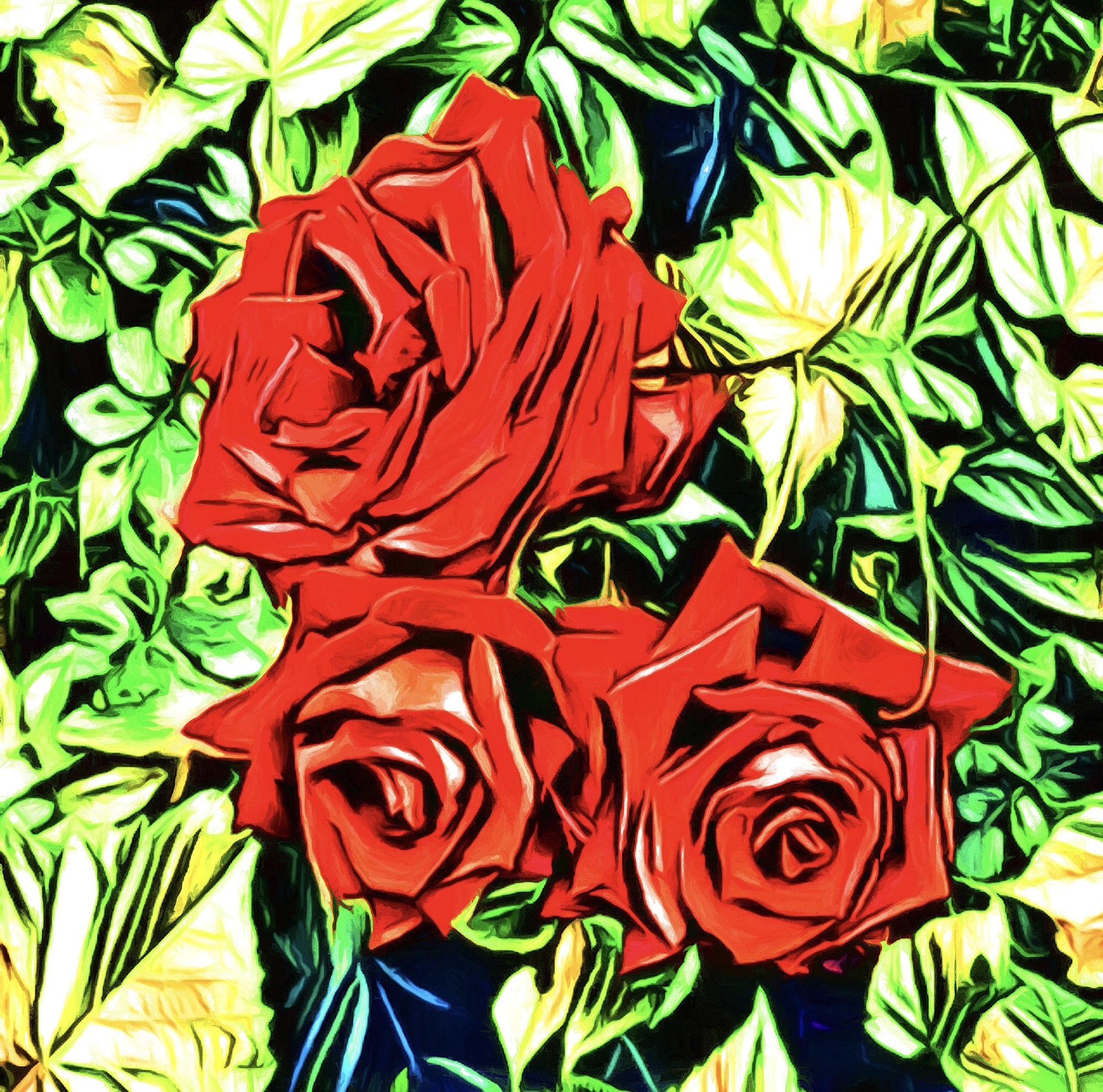
June in the Valley, with roses.🌳🌱🌹


I am supposed to be “good at it,” but lately I don’t feel like I’m good at much of anything. I can write this and that on the blog, but every project I’m working on right now is STUCK. That includes the article that was due… yesterday… hmmph….
Writing is hard, even when one thinks one knows what to say.
So, this famous writer’s block - I have endeavored to “picture it” (first of all, to myself) in this cartoon.
Sorry, I am staring at the screen trying to think of more things to write in this blog post. Surely I can “pad this” with some fluff. I have written so much fluff over the years, it should be easy to churn out more words.
I’ll churn out my article, because it’s needed by people, and I’m the only person - here and now - who can write it. But the “fluff” of words that I used to be so be so proud of? It’s vanity. It’s just a waste of time.
When you’re young, you can do so many things without even realizing the effort and energy they require. And you end up wasting effort and energy on things that are not worth it, and worrying about things that are not important or are not within your power to control. Young people today can even “burn out,” but then they usually recover quickly. They easily forget whatever lessons they might have learned.
I guess I was forced to learn sooner than many, because of the limitations of chronic illness. I used to have buckets of energy, and I carelessly poured them out on the ground. But I know that - if I were rejuvenated now with all that energy - I would soon forget what endurance and patience have begun to teach me, and I’d run out and be stupid all over again.
It isn’t so bad to have to face limitations, or to endure frustration and weakness. It is one of the paths by which we learn patience, and patience is a long lesson. A long, hard lesson.
There is consolation, however, in remembering that patience has resources that can sustain it. Because we are not alone. And patience creates the “space” within us for listening and - ultimately - responding. Patience is the school of love.

Pope Francis reminds us that the Holy Spirit leads us to “a convinced, joyful relationship with the Lord…, to personal knowledge of Jesus, who enters the heart.”


How strange that they thought it necessary to wage war against their own capital city, Beijing. The forces they sought to overcome were… their own people who lived in the city!
The people had succeeded in preventing armed units from entering Beijing after the May 20th declaration of martial law; they made their stand in solidarity with the hundreds of thousands of students who had occupied Tiananmen Square in peaceful protests over the previous seven weeks. Under the broad category of “Democracy,” the students were calling for the freedom to ask the fundamental questions of human existence, to express the ineradicable desires of the human heart.
These young people were not satisfied with the bread and circuses of the previous decade’s “Reform and Opening” engineered by the PartyState. Many didn’t have a clear idea of what they actually wanted. But they wanted the freedom to search for it. And their desire spread like fire in the Spring of 1989.
This was enough to mark them as enemies of the State power that had arrogated to itself the right to define, and ultimately remake, human beings according to its own suffocating ideology.
But countless citizens of Beijing - ordinary people, workers, vendors, bus drivers, restaurants, even the local media - stood with the students. Finally, the 27th Division of the PLA was ordered to force its way into the city and “clear the Square” of the protestors.
The full story of that horrible night remains in part obscure, but only because the repression was so inhuman, so brutal, and so thorough in “clearing” Tiananmen Square of the protestors and the evidence that they had ever been there. First the army took the city itself by indiscriminate force in its streets, with tanks and Armored Personnel Carriers (APCs) shooting down civilians frequently and at random.
Then the 27th Division, known for their efficiency and unquestioning obedience, headed for the Square, where the student protestors maintained their non-violent resistance surrounded by guards (not carrying lethal arms) of the Shenyang Military Region. What happened next? Many voices with diverse agendas give different accounts. The Chinese Communist PartyState, not surprisingly, praised the 27th Division for quelling “counterrevolutionary riots” on that night, and put the death toll at about 200. The general consensus is that “thousands” died in the city and in Tiananmen Square on June 3-4, the vast majority of whom were unarmed civilians and students. Their may have been some success, at some point, by mediating faculty members - including the at-that-time young professor Liu Xiaobo (for whom Tiananmen was a decisive turning point in his becoming a radical public dissident) - to open up “corridors of evacuation” for some of the students to escape with their lives.
But there were no iPhones in 1989 (or even video cameras small enough to escape confiscation) or Twitter live feeds to record and/or broadcast the carnage in the Square, and no possibility of a “body count” before the PLA’s 27th had finished their grim assignment. If the citation below is accurate, we are not likely to find “mass graves” anywhere. Not that an atrocity of this magnitude depends for its universal condemnation on how many people were murdered. Yet the Chinese government forbids all discussion of the Tiananmen Square Massacre and vigilantly roots out any mention of it in the educational and social communications of its 1.5 billion people.
There is one report, only recently made known, that deserves our attention. Documents declassified by the British government in 2017 include a secret diplomatic cable from Britain’s ambassador to China in 1989, Sir Alan Donald. Information was relayed to him by a consistently reliable intelligence asset who received it directly from a member of the highest organ of central government, the State Council.
This excerpt from the asset’s report - as presented in the BBC news - speaks for itself. I should note that this text describes some very disturbing - frankly, just plain sick - behavior. Apparently, when the army arrived, a deceitful announcement was made:
“Students understood they were given one hour to leave square but after five minutes APCs attacked.
“Students linked arms but were mown down including soldiers. APCs then ran over bodies time and time again to make 'pie' and remains collected by bulldozer. Remains incinerated and then hosed down drains.
“Four wounded girl students begged for their lives but were bayoneted.”
Today, thirty three years later, the Chinese Communist PartyState has nothing to say about this crime against humanity, which not only crushed untold human lives, but also tried to crush the human heart’s aspiration for something beyond material prosperity, that deep and mysterious awakening of the core of the human personality that people seek to express when they use the word “freedom.”
Freedom can be distracted by false and superficial promises. It can be deluded, misdirected, discouraged, and even turn toward destructive behavior. Those of us who live in the “Free World” have demonstrated all this beyond any reasonable doubt.
But the fundamental impetus of freedom cannot be crushed. Its “crying-out” cannot be silenced.
By the time Liu Xiaobo won the Nobel Peace Prize in 2010, he had spent 21 years in and out of prisons and labor camps in China, struggling for freedom, for recognition of the dignity of every human person. In part his efforts were sustained by a sense of obligation toward the students who died on June 4, 1989 in Tiananmen Square. His relentless testimony is eloquent, enduring, and in many ways shattering. Again and again he gives words to the indestructible cry of freedom, of the heart, of suffering - the question that begs for an answer.
“Ten years ago this day
dawn, a bloody shirt
sun, a torn calendar
all eyes upon
this single page
the world a single outraged stare
time tolerates no naïveté
the dead rage and howl
till the earth’s throat
grows hoarse.”
~Liu Xiaobo
excerpt from the poem Standing Amid the Execrations of Time (June 4, 1999)

The original 1962 print edition by Mill Hill Missionary Father John Faupel used to be difficult to find “in the olden days.” Cheers for electronic media, for making rare out-of-print books widely available. An inspiring account of inspiring witnesses to Christ!
The martyr pictured here (not a picture from the book) is Saint Joseph Mukasa Balikuddembe.
He was the King's personal attendant and head of the royal household. He was able to obtain religious freedom for Christians, and his teaching and example strengthened the faith of many converts. But he also fearlessly rebuked the King for his superstitious and immoral life and in particular for the execution of a Protestant missionary bishop. Joseph Mukasa was brutally executed for teaching the Christian faith and for his defense of Christians, November 15, 1885.
He is a patron saint of politicians.


As you know, I am fond of things that grow. I often post pictures of flowers and fields and streams, although I know very little about the facts and specifications associated with them. I could learn more about them, and perhaps I will in the future. But over the past decade I have preferred to appreciate them with a quiet discursive mind, allowing greater scope for simply seeing them every year, doing a little photography and/or art inspired by them, and sharing their annual images.
I spend almost all my other waking time studying, reading, writing, doing creative work, thinking - all of which, in recent months, have become more difficult for reasons I don’t know but which I hope are temporary. As I have mentioned elsewhere, the unprecedented events of the past two years - jarring for humans even for this perpetually tumultuous emerging epoch that we live in - have brought many of us to the brink of a psychological and emotional exhaustion that we can’t afford to admit to ourselves. We are keenly aware, still (even if only in the back of our minds) that we have not arrived at anything like a decisive resolution to the global crisis that began more than two years ago. Twitter feeds and clickbait headlines preserve their determination to remain fickle and easily diverted. We must not allow them to remake us into fickle, easily diverted people. Many human challenges and catastrophes that we were introduced to in 2020 (and 2022) remain very much on center stage.
So it may seem that flowers, and the appreciation of their surprising yet tenuous beauty, provide an opportunity to escape from the seriousness (an often unwelcome) business of engaging the controversies of our time. That is not true. Flowers are very serious indeed. But we waste too much time, in any case, living the pretense that every problem depends on our securing the correct opinion, doing “something” about it, and defeating the opinions of our adversaries (who are, of course, wrong). Certainly we all have tasks, responsibilities, reflections to contribute, and also convictions about reality where we must take a stand. And when we do take a stand, it is more often a matter of endurance and fidelity - a matter of patience, sacrifice, suffering, witness [even martyrdom] rather than “winning” or success in seizing power with too much presumption that we will be different, that we will use it for the good.
The flowers give us a chance to “rest” from the burdens we so often impose upon ourselves.

They bloom every season for a few weeks, and then give place to the verdant leaves of Summer. There is nothing to argue about here: perhaps many people are already bored of them before they disappear. Can they really be worth our attention? Flowers are nice. They are sentimental. They seem to be the opposite of “provocative,” and they don’t move or challenge (or threaten) anyone, except perhaps poets and lovers. Some flowers are edible, or decorative, or useful in other ways, but otherwise what concern are they to us? When we need to pour the concrete for the sake of building new edifices of human convenience or diversion, who thinks of the flowers?
Don’t misunderstand me. There are things we must build. But we must build carefully, with greater simplicity and attention, because one of the foundations of “sustainable human development” is recognition of gratuitous beauty.
That’s the thing about flowers: colors and formations and intricacies and such variety of inherent coherence in the flowers of Spring. They are beautiful. They are exquisitely “made”… but not by me, nor by anyone on this earth. We can make synthetic copies; we can cross breeds; we can cultivate them. Even if someone were to produce an organic flower entirely in a laboratory, they would still be copying something first encountered “gratuitously” in the world.
The flowers surprise us every Spring. It is good to encounter them and be stirred by the gift of their beauty. Then, in a few weeks, they are gone. But we still want to find the Beauty that resonated in those flowers, a Beauty that is beyond us, beyond all of its gratuitous abundance of gifts, an indestructible Beauty.
All of life is a search for this Beauty that never ends. The flowers cannot satisfy us, but they are signs that give us hope.


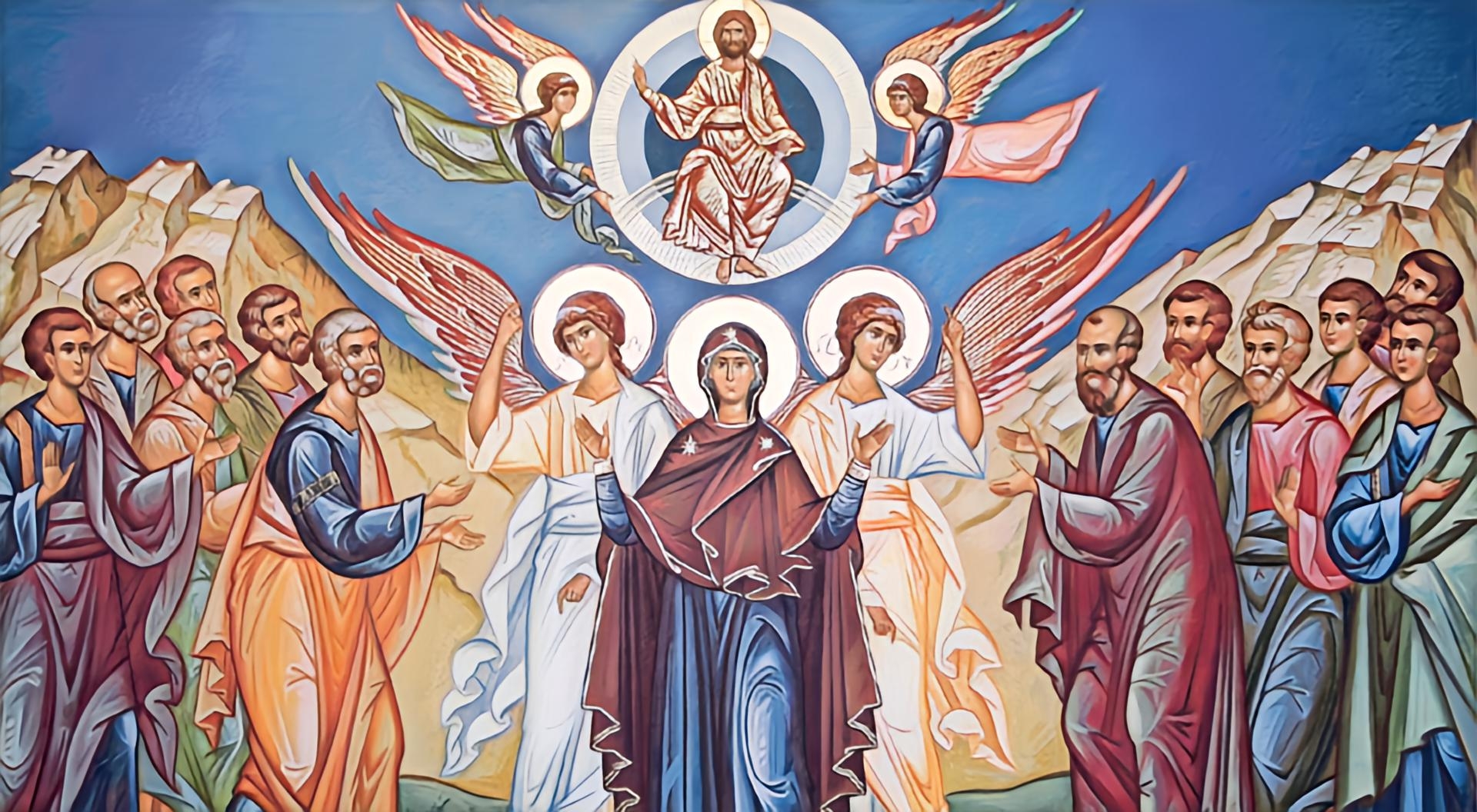
"Amen, amen, I say to you, you will weep and mourn, while the world rejoices; you will grieve, but your grief will become joy.
"When a woman is in labor, she is in anguish because her hour has arrived; but when she has given birth to a child, she no longer remembers the pain because of her joy that a child has been born into the world. So you also are now in anguish. But I will see you again, and your hearts will rejoice, and no one will take your joy away from you.
"On that day you will not question me about anything. Amen, amen, I say to you, whatever you ask the Father in my name he will give you. Until now you have not asked anything in my name; ask and you will receive, so that your joy may be complete.
“I have told you this in figures of speech. The hour is coming when I will no longer speak to you in figures but I will tell you clearly about the Father. On that day you will ask in my name, and I do not tell you that I will ask the Father for you. For the Father himself loves you, because you have loved me and have come to believe that I came from God."I came from the Father and have come into the world. Now I am leaving the world and going back to the Father."His disciples said, "Now you are talking plainly, and not in any figure of speech. Now we realize that you know everything and that you do not need to have anyone question you. Because of this we believe that you came from God." Jesus answered them, “Do you believe now? Behold, the hour is coming and has arrived when each of you will be scattered to his own home and you will leave me alone. But I am not alone, because the Father is with me."I have told you this so that you might have peace in me. In the world you will have trouble, but take courage, I have conquered the world."
~John 16:20-33

"Christ, this is the name that indicates and defines a reality I have encountered in my life…. It is possible to grow up knowing the word Christ well, but for many people He is not encountered, He is not really experienced as being present. In my case Christ bumped into my life, my life bumped into Christ, precisely so that I should learn to understand that He is the central point of everything, of the whole of my life. Christ is the life of my life: in Him is summed up all that I would desire, all that I look for, all that I sacrifice, all that develops in me out of love for the persons with whom He has put me….
"Christ, life of my life, certainty of a good destiny, and companionship in everyday life, a familiar companionship that transforms things into good. This is His efficacy in my life."

I heard somewhere that it was Mother Teresa who said that Jesus entered into special solidarity with the mentally ill when the crown of thorns was driven into His head.
In any case, I have been consoled by this “connection” - it helps me to remember that Jesus is present, that He is with me, accompanying me in my episodes of Major Depression and OCD. Indeed, He understands all the twists and turns of my overcharged, brilliant, strange, creative, wildly dreaming, fantastically overanxious, relentlessly driven, exhausted brain.
Medication has helped me (while also, no doubt, taking its physical toll on me over the course of decades). After years of trying many things (and still in conjunction with some of them) I have found that long-term treatment with regular medications is something I still need. They have been crucial for an overall stability that enables me to care for my loved ones and use the parts of my brain that do work pretty well.
I thought May was also supposed to be “Lyme Disease Awareness Month” but I haven’t seen much about it this time around. I suppose we all have “epidemic fatigue” from all the COVID vigilance. The tensions of the past couple of years have certainly worn me down. Nevertheless I continue to maintain my uneasy “truce” with Lyme, provided I pace myself slowly and diffuse stress as much as possible.
But mental pain in particular is sometimes like puncture wounds in the head. This is an analogy, of course, but modes of perception undergo distortion and constrain our capacities to see things in perspective within ourselves. It’s still very hard to convince many people - who occasionally “feel down” but manage to “pull themselves out of it” by thinking positively or changing a few activities - that mental illness is not like what they experience. Mental illness involves relentless afflictions that tear down the foundational psychological and emotional resources that help normal people resolve basic problems. It sucks the person into a downward spiral from which he or she cannot rescue his or herself without the intervention and support of mental health care practitioners, as well as loved ones and friends (insofar as possible).
It’s good to “be aware” of mental health. Whether or not you suffer in this way yourself, many of the people around you are “Christ” struggling on their way of the Cross while enduring the special blinding, burning, shattering pains of the particular “Crown of Thorns” that is mental illness.
Please, do not mock them. Do not let them fall to the ground and be crushed. Be compassionate and help them carry their burdens. Life is hard for all of us, and yet we are called to live it together, to live with understanding and love toward one another, caring for one another, sharing one another’s burdens. In this we follow Jesus, who is present with us, who is close to us in all our pains and disabilities, who frees us from the self-absorption of our sins - frees us to love and to let ourselves be loved - and carries all our burdens and our very selves because He wants to be with us forever; He wants us to be His brothers and sisters: divinely transformed in the Holy Spirit and humanly whole and free, dwelling in the House of the Father, which is our true home.
…in faith and hope and in the love that Your love for me, and for everyone, awakens in my own small heart; in the midst of many joys and some tribulations, clarities and obscurities, health and sickness, laughter and tears and cries for Your mercy on my every breath, I give thanks to You.

Papa is looking forward to the upcoming Summer season. Are you ready, Maria?…😊
Well, the weather is certainly getting nice.☀🌿


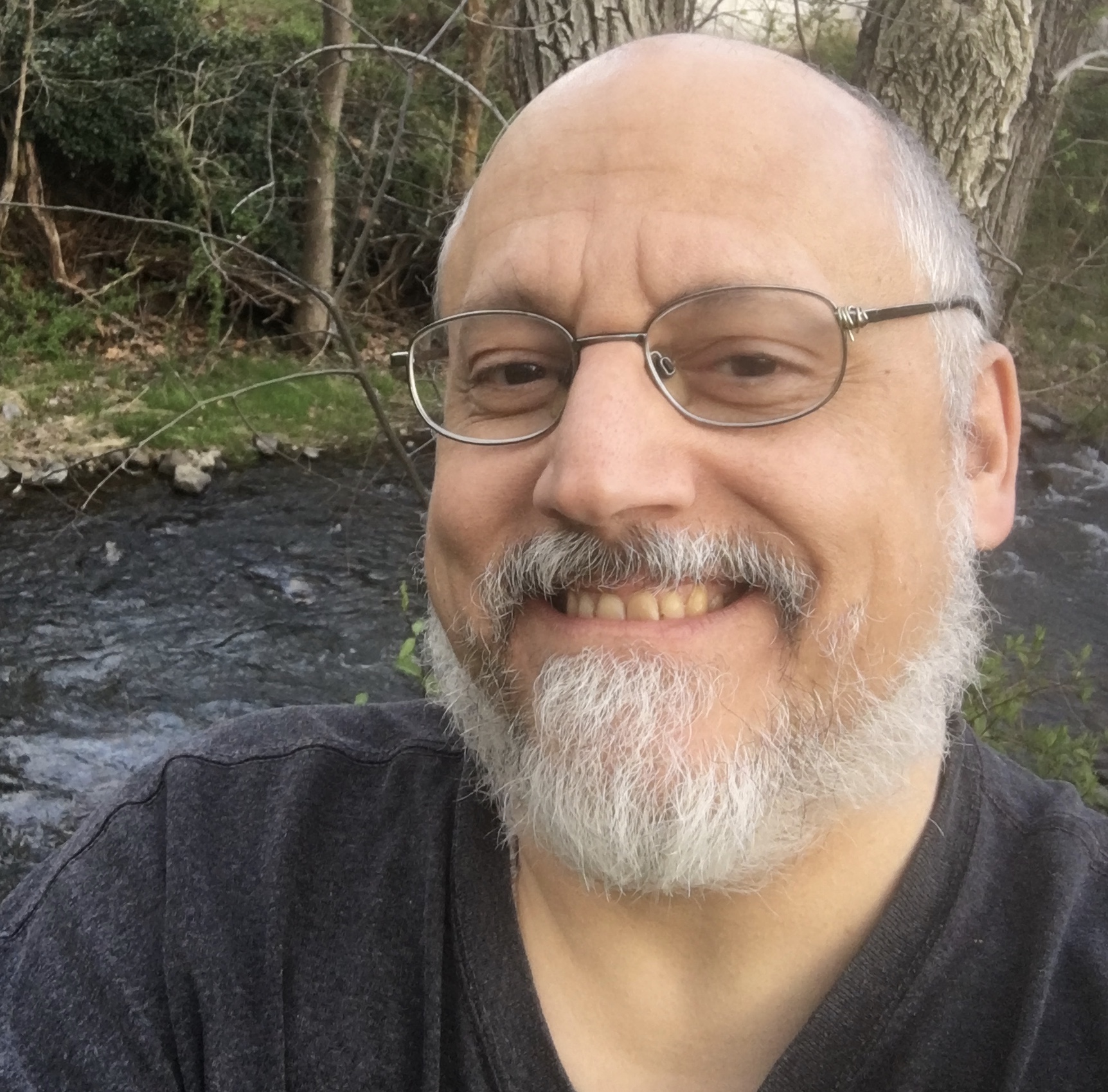

My gosh! Can you believe it was two years ago that schools and universities were closed, and this class was desperately struggling to finish the bizarre Spring semester of 2020 online? We had no idea what the future held in store for us back in those strange days....
I don't mean to imply that we know what "the future" has in store for us in the days to come. But we are grateful that things worked out for these kids to return to campus and finish on time.
Christendom remains my "academic residence" (even though I am no longer able to teach in the classroom). I remain Associate Professor Emeritus, and - although I rarely visit the campus in person - I value my ongoing connection for many reasons, not the least of which is that I have access to many resources for my research, which is helpful for my monthly articles in Magnificat as well as my ongoing projects.
Lucia is now the third of our kids to graduate from Christendom, and we are very proud of her. (And Teresa just finished her freshman year.) We have gone out of our way to not put "pressure" on any of the kids to attend "the local college" (which has also been, in a way, the family business for three generations of Janaros, at least in terms of contributing to building it). Perhaps it has been just as well that the kids have been able to experience the place as their own turf, without the oversized ego of their father casting his idiosyncratic shadow around as a teacher. That might have been awkward for them. As it is, all I do is participate with cap and gown in their graduations. This time, rain moved in and we didn't even get a picture with Lucia after the ceremony.
In any case, they have all grown in their faith, gotten an exceptionally thorough undergraduate education, and have made great friends. In the case of John Paul and Lucia, they found something more than friends...😉
John Paul met, dated, and eventually married (in August 2020) his wonderful classmate Emily Farabaugh. They are an outstanding couple as well as now the dedicated parents of Maria Janaro (I think you know who she is😊).

I'm going to be "Father of the Bride"!😳 Help!
Really, I'm just immensely grateful. We do not know what the future holds in store for us, our family, our poor world... but in all things I pray that we might continue to trust in God who is our Father, who loves us, and to grow in recognition of the closeness of Jesus Christ to every aspect of our lives. We pray to be servants of His immense mercy and love for every human person, with particular solidarity and compassion for all those He entrusts to us.

Five years, eleven months.💚⭐️
Christina Grimmie still shines her bright beautiful light all over the Internet.


The physical absence of my Mom (who died last July) and my Dad (+2019) is still… uncanny. It’s more than just “missing them” (though I do, certainly). I know they have gone to be with the Lord, to be drawn through His mercy (which brings healing and perfection) to the eternal joy, the beatitude, of unending communion with Him.
I think of them every day, and pray for them. I really think they also pray for me, and continue to look after me and my brother and Eileen and the grandchildren. But life in this world has changed in ways I never could have imagined, and sometimes it has been strange and dislocating, overwhelming and full of sorrow.
Life changes, and we have to “let go” of people we love, so as to grow toward the One who holds us all in His love - to seek Him in deeper, more mysterious ways, including those dark valleys where we don’t even know what’s happening or where we’re going as He carries us on His shoulders.
I missed my Mom on this first Mother’s Day without her.
I worked on “restoring” the photo above, with only limited success. It looks to be sometime in 1963, with my very young parents, Walter as a toddler, and me as an infant. Here is the young Janaro family in 1963.
Meanwhile, I was glad that Eileen got to see all five of her children at our house during the course of the day, plus her granddaughter. She is a wonderful mother (and nana) as well as being a wonderful wife. I know that seeing everyone made her happy. On a bittersweet day, this was the “sweet part.”
Happy Mother’s Day to all mothers!

"Through this union of the immortal Son of God with our human nature, all humans were clothed with incorruption in the promise of the resurrection. For the solidarity of humankind is such that, by virtue of the Word's indwelling in a single human body, the corruption which goes with death has lost its power over all" (Saint Athanasius, On The Incarnation 2:9).

And now we have war, once again, involving the world’s largest and most ambivalent protagonists of the use of technological power. Here I don’t mean the brave and suffering people of Ukraine, who - even as they seek to defend themselves with whatever weapons they can get - are drawing on deeper interior resources of strength and resilience, resources which they must continue to rely on above and beyond any promises or alliances with those who live by the material logic of technology alone. Ukraine is an emerging nation, and must struggle not only against their appallingly brutal enemies but also guard their souls from the counter-materialism of those who claim to be their friends.
I see no way around the unimaginable consequences of this already-escalating global conflict. The wealthy First World countries in Europe and America are plunging in with little understanding of the whole context of the Russian imperialist faction’s historical ambitions and Ukraine’s (and other nations’) historical sufferings. Ironically, this ignorance might be a "lesser evil" in the present circumstances; the secularist West is focused on Russia's violation of international law and human rights in their aggressive invasion of Ukraine. This, at least, is a legitimate and concrete concern that everyone can understand and agree upon. News services everywhere are deluged by the awful facts and abundant testimonies to the ruthless and indiscriminate war Russia is waging (which is sadly consistent with the way Putin has used his war machine in the past, most recently in Syria). Our information resources and audiovisual media have little chance to exaggerate, sensationalize, politicize, or otherwise spin these events into the kind of combative entertainment that their distracted, shallow, soul-starved viewers clamor for. They don’t need to. We can satisfy ourselves and our restless curiosity by the feeling of being enthusiastic spectators in a war that seems far away from our own lives, but still made vivid by media technology. What we don’t see is how the war and its consequences draw closer to us every day.
NATO’s European and American countries—with some hesitations—have responded to Putin’s war in a way that suggests that we think it can be contained to the Slavic world and resolved by the right combination of face-saving and wheeling-and-dealing. As the months have passed, however, we are slowly moving toward the recognition that the factors involved in this war are beyond our grasp. Meanwhile, the Western alliance continues to isolate Russia with economic sanctions and pour billions of dollars and ever-more-sophisticated weapons into Ukraine. While this increases Ukraine’s chances of defending itself, it also may increase Putin’s intransigence and, perhaps, his readiness to widen the scope of the war and bring a new level of destructive technology into play, under the (not entirely untrue) pretext that our nations have already become de-facto belligerents in a war against Russia. This danger will grow especially as the invasion of Ukraine drags on and Russian casualties continue to increase.
I am not saying what should or should not be done to “change” the situation. I’m just trying to clarify my own understanding of what’s happening. I hope I’m wrong about some of it, and indeed the unfolding of historical events are influenced by many factors that cannot be predicted.
Nevertheless, what we are seeing currently suggests that escalation is unavoidable, and can be said already to be taking place. European Union, British, and American interests in supporting Ukraine are probably more complex and ambivalent than the altruistic platitudes about “freedom and democracy” that we hear everywhere right now. But what is undeniable is that Putin’s government in Russia is dictatorial, centralist, kleptocratic, belligerent, and mendacious. It is sure to get worse before it gets better. Putinism may be more tolerable than Soviet Communism, but that hardly justifies ignoring its invasion of neighboring countries and its own peculiar crimes. The Western alliance (and the U.S.A. in particular) cannot be faulted for calling out these evils and insisting they stop (notwithstanding our own hypocrisy, and our willingness to tolerate and/or ignore the evils of other regimes and the oppression of other peoples - which, to be fair, we may not always be able to address in a practical manner).

And, although Soviet Marxist-Leninist ideology is no longer a force in this region, there are other, older ideologies that may fuel the present conflict, or grow in influence so as to affect the future.
Unfortunately, Moscow today has turned all its forces in the “wrong direction” (in various respects) by renewing its centuries-old “Imperial Dream” of hegemony in Eastern and Southeastern Slavic areas and domination of the shores of the Black Sea. It is the dream of a “Greater Russia” whose conquests are justified by its unique Christian and historic “mission.” (I do believe that Russia and all the Slavic peoples have particular and rich contributions of Christian witness for our time, and unique gifts to share with the world, but this univocal, reductive “imperial dream” is not the way to fulfill such tasks.)
The new Post-Communist version of the dream mashes up pseudo-mystical aspirations with a crass materialistic power grab for regional resources, marshaling all under a repressive centralized regime, a mega-State designed not according to the Marxist minds of Lenin and Stalin, but still too pervaded by their “guts” (particularly Stalin’s)—their will to grab power and impose it by whatever violence is judged to be “necessary.”
Putin is probably more motivated by the mega-State, but Moscow’s imperial dream may be important for solidifying his strange alliance with Russian Orthodox clergy. There is the danger that this old dream - which is nothing less than the Muscovite “restoration” of Eastern Orthodox Christendom - is a worldly dream of reconstructing a very old power that Moscow has long coveted. The Imperial Dream began in the 16th century when Moscow declared itself “the Third Rome” after the fall of Constantinople, claiming the ancient Byzantine imperial pedigree for its relatively new rulers, who styled themselves “Czars” (the Slavic rendering of “Caesar”). Moscow’s archbishop was also invested with the title of “Patriarch” so that the church’s status might correspond to—and be subject to—the dignity of the new Caesars. All too often, the church’s witness to the Gospel was to be obscured or diverted thereafter by Russia’s Emperors to serve their own worldly ends.
The Imperial Dream tied the Russian Orthodox Church to a particular nation and the will of its autocratic rulers. The ensuing centuries were rich with many holy people, a heritage of profound Christian living, and - eventually - an abundance of martyrs. But too often the hierarchy was dominated by the overwhelming temporal power that held the real primacy in the Dream. In the 18th century, Peter the Great even abolished the Moscow Patriarchate’s status, which was only restored in 1917 by a Synod that had begun meeting during the brief period after Nicholas II’s abdication, when the Duma (Russia’s Parliament) had declared freedom of religion from government control. (As I have written elsewhere [see HERE] the Russian Byzantine Catholic Exarchate in full communion with the Pope also blossomed briefly during this period.) By the time the Orthodox synod had declared the restoration of the Patriarchate, however, the Bolshevik Revolution had prevailed. Future Patriarchs would either be imprisoned (and/or martyred) or be forced into various forms of subservient collaboration with an atheist regime.
But history has more tenacious roots than we think. After the breakup of the Soviet Union, there has been a religious renaissance in Russia, and many Russians once again identify as Orthodox Christians. There is much to be encouraged about in these developments. But the rise of Vladimir Putin’s dictatorship has also seen a resurgence of a Neo-Muscovite Imperial Dream. The essential worldliness of such an ideal (even wrapped in the mantle of opposition to globalist moral decadence and secularism) can only be a distraction away from whatever renewal of genuine Christian faith is happening among Russian people today.
How far might Putin and his followers go with this new Dream? Are we seeing the rise of a new form of an old ambition: the “Christian Caesaropapism” that prevailed in Constantinople in the second millennium, prior to its decline, and which was then adopted by the “Caesars” of Moscow up to the dawn of the 20th century?
Czarist Russia had a deep and long-lasting fascination with Constantinople, and sought to wrest it away from Turkish rule and restore it to Orthodoxy (and establish its own political power there). Perhaps we should revisit Russia’s 18th and 19th century clashes with the Ottoman Empire, including the complex events of the “Crimean War.” Does this have any relevance for the current Empire of Putin? In practical terms, probably not. Obviously, the circumstances of Czarist times were vastly different from today. Still we might use our imaginations to venture beyond realpolitik, and ponder the extensiveness of the dreams that motivate people and can become new ways to dress up the desire for power.
 |
| The symbol of today’s Russia: the Byzantine two head eagle |
It’s not utterly far-fetched to imagine that Russian regional hegemony (including control of the Black Sea) might someday (sooner or later) lead some lmperial Dreamers to take the “dream” all the way to Istanbul, in a new effort to reclaim the ancient Basilica of Hagia Sofia for Orthodox Christianity and restore the city of Constantinople within the Third Roman Empire. This time, however, the Empire would be governed not from the Bosporus but from Moscow - the self-appointed “Third Rome” after Constantinople’s fall nearly 600 years ago. Of course, this is stretching the whole theme too far (even if maybe this scheme might sound “pretty good” to some traditionally-minded Christians). Its achievement would come at an extremely high price. In fact, a wholly Russian Imperial realm effectively controlling everything from Saint Petersburg to Constantinople would be problematic in many ways, and is virtually impossible to picture in today’s context. That doesn’t mean that no one dreams about it, or holds out hope for it in the future. Stranger reconfigurations have happened in history.
Meanwhile, the idea of a Greater Russia—united under Moscow and a conception of “Orthodoxy” as primarily a common civil ideology, a politically useful (and ultimately State-controlled) ideology—presents itself more plausibly, but also with more hidden dangers. Obviously, witness to Jesus Christ and life centered on Him would lose its essential focus, regardless of how much religious talk and action remained about Him. Bishops might even be tempted to bless government injustices, or to refrain from speaking out when they should. Such temptations are common in the secular world, but the Imperial Dream would tend to urge a certain particular enthusiasm from its religious ministers, and would reward those who would propagate it.
Moreover, the New Imperial Dream would not tolerate anything even perceived as a potential rival. Greater Russia, specifically, would certainly apply “pressure” for the “reintegration” (i.e. the suppression) of the recently constituted Ukrainian Orthodox Church under the Metropolitan Archbishop of Kyiv (and canonically independent from the Patriarch of Moscow), which was recognized by Orthodox churches under the Ecumenical Patriarchate in 2018, but rejected by Moscow. Moreover, Greater Russia would utterly oppose even the continued existence of the “Greek Catholic Church” of Western Ukraine (much less would it hold out any hope for taking up again the building of an Eastern-rite Catholic eparchy in Russia itself). The Ukrainian Catholics would once more be forced underground, because their very existence would be a fundamental challenge to the State/Imperial claim that a Church’s identity and authority are entirely subordinated to and ultimately in service of the Empire. The New Imperial Dream of a unified Greater Russia would insist that all Russian Christians acknowledge the Moscow Patriarchate’s primatial role within the (one and only) Russian Orthodox Church, which would be bound up with the de-facto more fundamental claim of Russia’s temporal leader to be a kind of “New Constantine” ensuring the order of a newly emerging Russian Byzantine Christendom. The “Christendom” of the “Third Rome,” ruled by a centralized Russian dictatorship, would not be a hospitable place for the growth of Ecumenism among its own subjects. It would be—especially—a realm hardened in opposition to the Successor of Saint Peter and fiercely intolerant of Christians in full communion with him, i.e. Catholic Christians.
(There is a prophet from Russia’s past whose voice might be heard again, who denounced these pretenses in his own time: Vladimir Soloviev. But that’s another story for another day.)
These scenarios may all seem outrageous, but they are on the minds of more than a few pious Russians and are quite familiar to Vladimir Putin. But it is tragically wrong-headed to endeavor to build an allegedly Christian-inspired society that rejects the Papacy in favor of the hegemony of a partisan Super-State posing as a mythical Empire. And, we might add, this dream society would be built on top of the graves of a new generation of martyred and murdered Ukrainians: Ukrainian Greek Catholics, whom this Empire must reject by its very nature; Ukrainian Orthodox Christians who refuse to surrender their faith to the de-facto institutional control of the “New Caesar;” Ukrainians of all religions or ways of human seeking who continue to insist that being Ukrainian is important to their journey in this world, and that no foreign power has the right to divest them of their national allegiance and cultural identity, to drive them from their homes and destroy their land.
And so we find ourselves back in Ukraine, where people of good will from various traditions—but let me note here in particular Byzantine Catholics and Orthodox Christians—have marched side-by-side, from the Maidan protests of 2014 to the present-day defense of their country. Let it be clear to my own fellow Roman Catholics in the West: this real Christian and human solidarity is a far greater hope for the reunion of these sister churches than the fevered dreams of a “Greater Russia” dominated by future self-appointed “Caesars” in a “Rome” of their own design.
"I can do anything through Christ crucified, for I know truly that he does not lay a heavier load on his creatures than they can bear. So I want to leave the measuring up to him and, for my part, bear these things with true patience... I know that whatever God grants or permits, he does it for my good, so that I may be made holy in him" (Saint Catherine of Siena, 1347-1390).
[Image depicts part of the tomb of Saint Catherine of Siena under the main altar at the Dominican church of Santa Maria Sopra Minerva in Rome. She was a great “friend” and a big help to me when I lived in Italy many years ago.🙏🙂 Buona Festa!🍝🥗]


I don’t need any additional medical advice. Just prayers, and whatever anyone can offer to help me remember that I’m not alone (even if I am too weak to respond, it will be much appreciated). Of course, I’m so blessed by friends and family who love me, but I’m also congenitally complicated, and they don’t always know how to respond to me. I don’t blame them. And everyone is so busy all the time (this is the universal affliction of first world people). I have it too, at least in the measure that I condemn myself for being “unproductive” (though, in fact, I haven’t done too badly). I’m depressed in a manic world.
What I must do is love and act in the ways I can (not only with my talents but also my suffering), not concerned with doing many things, but if possible going deeper in a few essential ways, without anxiety about how much or how little lies ahead for me to do. “The only thing that matters is to do God’s will” - I know that this is true, but I struggle against it like all other sinners; I resist letting God’s love be the measure of my life. His love is so mysterious… Still, God is good, all the time.
Also, I don’t think He’s finished with me yet.
I will try hard to recover something of my strength (or find new sources of strength, and focus more on using my strength for what really requires my attention). Somehow, I am convinced that my charism has not yet fulfilled its purpose, and that I am still called to give and endure many things, to face challenges and difficulties on a larger scale than I have yet known. This is how it seems to me, but its all in God’s hands.
We will all need encouragement in the times to come, we will need to remember that the risen Lord walks with us even in the valley of the shadow of death.
April 24 is Pacha (Easter) in the Eastern Orthodox churches. It is the Eighth Day, the Octave of Easter in the Western Christian world, and - in particular - “Divine Mercy Sunday” in the Catholic Church.
Jesus, I trust in You. Have mercy on us and on the whole world. Free us from sin, fill us with your love, and bring us all to eternal life. Grant peace to our poor world, especially to the people of Ukraine.


