Thursday, December 17, 2015

Beethoven: One Day is Not Enough!

Dude never, never, ever smiled!
HAPPY BEETHOVEN'S BIRTHDAY!

I know, you thought that was yesterday.

All that is actually known about the birthday of this great classical composer whose genius arguably ushered in a new era in musical history is that he was baptized on December 17, 1770.

In those days of high infant mortality, baptism was usually administered right after birth. There are, of course, instances in which birthday and baptismal day did not correspond (for example a birth near midnight) but we have no way of documenting this.

You see, in those days, in the Habsburg "Empire"--that patchwork of places and peoples and customs loosely tied together by aristocratic family bonds with an inefficiency that would boggle the twenty-first century mind--the Church was the primary dependable written archive for ordinary life events.

The Elector of Bavaria or the Mayor of Bonn were not in the business of keeping databases or issuing birth certificates. Nevertheless there is a tradition of marking Beethoven's birthday on the 16th of December, a date that may have originated with household memories of a crying baby in the night. In any case, scholars are divided on "the birthday question." Many experts hold that today is the most likely day, given the documentary evidence, including the most widely used and trusted modern general resource for research by specialists, intelligent inquirers, and everyone else too. The following graphic illustrates this position:

The first panel of Google's Beethoven Birthday diddly, for December 17. This is fun!

Others (including myself) prefer the more antique and persistent testimony that has dominated the literature for the past 60 years. We have based our case for December 16th firmly on the documentation of Schulz and Schroeder:

Note the date of 12/16 clearly indicated in the lower right corner.

The best way to solve the dispute, however, is simply to celebrate both days! That is what I think we will do here. Whether today or yesterday, Ludwig van Beethoven is now 245 years old.

Seriously, some who read my blog may not know that I am a trained musician and a music lover myself. I play the cello and the guitar. Circumstances of various kinds have prevented me from doing much lately with my own music, but recently I've begun to feel a desire to take up the instruments again. True, I said something like this two years ago and I have played very little since then. But, perhaps now it will be different....

Taking up music again would be positive sign that Depression might be moving into remission, somewhat.

'70s teenager JJ on a Yamaha FG-75 steel string acoustic guitar
My musical appreciation covers a large range of genres and categories, "from Bach to rock" ... which is to say a wide variety of classical and contemporary forms. I was first cellist in my high school orchestra and played electric guitar in a garage band while also composing my own instrumental pieces for classical guitar.

I still listen to many kinds of music and appreciate different genres according to analogous criteria. Beauty manifests itself in exalted and humble ways alike, in great symphonies and simple folk songs, and from the soaring cadences of Tchaikovsky's Violin Concerto to the "rattle and hum" of The Edge's guitar. The great masters are the tall majestic trees, but there is a whole forest of plants, flowers, vines, grasses, and peculiar weedy sprouts that can surprise us.

Along with the classics and the traditional music from different cultures, there is almost too much "popular music"--but it too can be appreciated with the discipline, discretion, and attention that respond adequately to reality as a whole. There are all the varieties of "electronic, amplified ensemble music"--I'm searching for a broader term for the most common music today, the stuff you find on iTunes, whether it's "pop" or "rock" or "indie" or "alternative" or "nu-this" or "post-that," as well as folk and roots music, bluegrass, film scores, electronica, world music, jazz, blues, gospel, choral, instrumental, etc.

Music fascinates me. Anything that makes sound can be brought into relation with corresponding sounds; these can be crafted by the marvelous powers of human intelligence and human aesthetic sensibility, discovering and shaping rhythm and harmony (and discord too) into an audible and resonant expression of beauty.

Okay, now that I have given a nod to everyone else and every other kind of music, I want to come back to Beethoven, because Beethoven will always be my favorite. And, anyway, it's his birthday[s].

Some of my earliest memories are listening to Beethoven symphonies with my Dad on "Hi-Fidelity" vinyl records. I owe my lifelong love for Beethoven to him. Thanks, Dad.

Oh wait... some of you are puzzled by words like "vinyl" and "Hi-Fidelity." We're talking about "records." You may have heard of CDs? These were kind of like CDs only bigger and... other things that I can't explain here. They looked like this:

Actually that's just the "label" in the middle. The whole record is the larger circle around it.

When I was a child, the interpretation of Beethoven was marked significantly by the towering musical figure of Arturo Toscanini, who emphasized conducting orchestral music in such a way as to attain the precise intent of the original composer as much as possible. Whether he succeeded in this project is a matter for debate, but his mid-century recordings are regarded as classic renditions in their own right of Beethoven's great Symphonies.

I didn't know any of that at the time. I just assumed we liked Toscanini because he was Italian.

Orchestral music remains my favorite, and the Symphony is a wonderful vehicle for working the full dynamic range and tone of an orchestral ensemble. Beethoven's nine Symphonies are milestones of the genre. I find it impossible to pick a single favorite. I suppose it's a tie between the fifth, the seventh, the third, the sixth, and the ninth.

But here's a record I remember vividly from my Dad's collection:
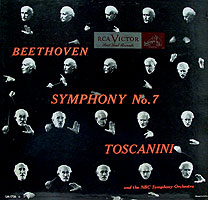

All those "Toscaninis" on one record cover. It was kind of mind blowing for a four year old kid. I don't know where this record is today (I got this image off the Internet). I have it somewhere. Or, Dad, do you still have it?

But the music... ah the music of the A major Symphony! The perfect way to celebrate Beethoven's 245th Birthday. And we don't need the record. All we need is a link to this famous 1951 performance, which I shall happily provide.

Click and enjoy:


Monday, December 14, 2015

The Guide "In Darkness and in Safety"


"In general the soul makes greater progress when it least thinks so; indeed, most frequently when it imagines that it is losing. Having never before experienced the present novelty which dazzles it, and disturbs its former habits, it considers itself as losing, rather than as gaining ground, when it sees itself lost in a place it once knew, and in which it delighted, traveling by a road it knows not, and in which it has no pleasure... But inasmuch as God Himself is the guide of the soul in its blindness, the soul may well exult and say, 'In darkness and in safety,' now that it has come to a knowledge of its state."

~St John of the Cross, from The Dark Night of the Soul

Sunday, December 13, 2015

Gaudete! Rejoice!

"Shout for joy, O daughter Zion!
Sing joyfully, O Israel!
Be glad and exult with all your heart,
O daughter Jerusalem!
Fear not, O Zion, be not discouraged!
The Lord, your God, is in your midst, a mighty Savior;
He will rejoice over you with gladness,
and renew you in His love" (Zephaniah 3:14,16-17).


Saturday, December 12, 2015

Guadalupe: Mary Loves Us, and She Can Change History

Happy Feast of Our Lady of Guadalupe!

This is the great secret of the universe: we have a beautiful Mother who bears us in God's grace through this life and "gives birth" to us in the glory of God's kingdom.

She is not a goddess. She is a creature, a human person who said yes to God and brought God Incarnate--the Word made flesh--into the world; she is a human being who says yes to us and wants to bring Christ to each of us.

And she is not shy. She loves us with all the power of a woman's love: she is intelligent, practical, persistent, and downright spunky when necessary. And all of this with a woman's love, a mother's love, that brings peace. The story of Guadalupe makes this clear. Really, it is clear in the New Testament, if we take the trouble to dwell on the woman who appears there and the great heart that is manifest in her every gesture.

Mary sought out Saint Juan Diego on this marvelous December morning in the year 1531 and gave him the great gift of this image of the woman clothed with the sun, with the moon under her feet. In the image she carries Jesus in her womb (as the black ribbon indicates), ready to give Him to others. And Mary entrusted this simple man Juan Diego with the charge of bringing this mysterious gift to those around him, to the bishop of Mexico, to the peoples of this land, to the whole world.

This is the story of how Mary loves each one of us. It's the story of how she takes care of us, and even how she outwits us when we try to run away. It's the story of how she invests us with the courage to share Jesus, to participate in her maternal mission to bring the hidden Jesus to birth in the hearts of others.

And it's a story that really happened in history. You can go to a real place, a physical place, the Basilica of Our Lady of Guadalupe in Mexico City, and you can see with your own physical eyes this astonishing icon. Science cannot explain anything about it. Science cannot explain how it was made or how it endures.

Millions of pilgrims over the past 484 years will tell you that it is a miraculous image that communicates the personal presence of our merciful mother Mary, and Jesus her Son. They will tell you that it's a privileged place of encounter with Jesus and Mary.

Next year, Pope Francis will go to Mexico City because, as he says, "Our Lady is there." His predecessor Pope Saint John Paul II visited Mexico and the Basilica five times during his pontificate, where he would spend whole nights in prayer with Mary.

Miracles really do happen in history. Go to Guadalupe as a pilgrim and see for yourself. Or just know in your heart that she is there, that she is keeping her promise to offer all her love, to offer Jesus, to those who cry out to her and accept her as their mother.

The miracle of Guadalupe strengthens and deepens my certainty that Mary is a real person who really exists and who really loves me. There is this woman, a real woman, who knows me and is totally determined to crush the evils that threaten me, to draw me away from my self-love and free me from all my worries, and to give me Jesus Christ.

Yes, Jesus is our Redeemer, and nobody knows that better than Mary. That’s why no one can bring Him close to us like Mary. Doesn’t it make sense that, at the heart of the plan of salvation, there is a woman, a real woman, who is not just a passive vessel, but whose active, vital, feminine, maternal love really makes a difference in our lives?

Mary is that woman. She has found me in so many places in my life, but especially at Guadalupe. I have no excuse to doubt her tenderness or the goodness and mercy of God.

I know that if we give space for Mary to love us, we can be confident that Jesus will change us.

We are pilgrims on a journey to eternal life, but Mary--like a good mother--cares for every aspect and detail of our lives. She is not afraid to get involved with the historical lives of persons, cultures, nations, and whole peoples. We are all her children, and two thousand years of Christian tradition testify again and again to Mary's presence, protection, and help in our greatest spiritual and temporal trials. Mary is not afraid to change the course of history. The icon of Guadalupe changed the history of the Western hemisphere, and continues to bring change even in the midst of much tumult and violence in this part of the world.

Also in our time, Mary has promised conversion and a period of peace for the human race. Let us open our hearts to Jesus in the ways that she has requested, and then bring all our anxieties and troubles and weaknesses and fears to her, our good mother.

This is the beautiful way to become children again and thus inherit the Kingdom of God. It is also our greatest hope for peace in this world.

Thursday, December 10, 2015

Words of Guidance From Benedict in His Final Advent as Pope


I found a couple of posts I made in 2012, thanks to the On This Day app. They were two rather lengthy quotations from the words of Pope Benedict XVI (who was still in office, in what proved to be the final Advent of his papacy). I'm not sure when he said them, but I posted them both on December 10, 2012:


The last thing I could have imagined "on that day," three years ago, was that Benedict had already discerned with firm conviction God's will for his own mysterious, unique vocation. He was only three months away from making the stunning, historic announcement of his resignation from the papacy.

His natural death would not have surprised me three years ago. But this... sacrifice: it was and remains a powerful witness to Jesus's authority over His Church.

Benedict was called to make this sacrifice "without fear but with simplicity and joy"--to put God entirely at the center of his life, to live in silence and prayer and allow God to choose another to take his place on the chair of Saint Peter.

Remarkably, Benedict continues to dwell in that silence nearly three years later. His quiet presence at the Jubilee Door on Monday and his embrace of Pope Francis were a reminder to us of the ways that his gesture of abandonment continues to instruct us.

When Benedict opened himself to "the divine initiative" in his vocation, he opened the whole Church. Now he continues to witness to our need in the Church to make room for Jesus first--and for the presence of His Spirit--when speaking of God, "trusting that He will act in our weakness."

Benedict continues to live in this trust "that the more we put [Christ] at the center rather than ourselves, the more fruitful our communication will be."

Do we believe this? Are we learning to trust in Him first and at the center of everything: to trust in Him to accomplish His infinite and incomprehensible will for our good even in our weakness?

Let us leave more room for God.

Wednesday, December 9, 2015

Our Friend Juan Diego

Here is Saint Juan Diego Cuauhtlatoatzin in a statue that I got in Mexico some years ago during one of my pilgrimages. I took a few quick pictures of it today and worked on them in various ways with digital graphics, just to exercise my brain.

The statue is usually in the dining room looking very small beneath a great framed photographic reproduction of the Tilma. And Juan Diego wouldn't want it any other way.

Here is a "saint" who is so humble that his identity is almost entirely transparent to the Mother of God. It is true, he is a patron of indigenous peoples of America as well as all lay persons. He is a wonderful example for us all of what it means to live the gospel with faith and love, simplicity and perseverance.

But he was just a poor man who encountered the beauty of Jesus living in Mary, and followed. He gave himself over to a humble place in a great and mysterious story. And he remains standing behind the Merciful Mother, giving her a place where she can give Jesus to us. The image of the Virgin remains on his cloak today after nearly 500 years, in a great Basilica in one of the most widely visited religious shrines on earth.

I pray to him every day. I am convinced that he is one of the greatest saints of the Church. He stands forever in a humble relationship to Mary, her "dearest and smallest son" and in this way so much like Jesus.

Tuesday, December 8, 2015

Jubilee Year of Mercy: The Light of God's Love and Forgiveness

Pope Francis opens the Jubilee Door of Saint Peter's Basilica in Rome (see Traces magazine HERE)


"The history of sin can only be understood
in the light of God’s love and forgiveness.
Were sin the only thing that mattered,
we would be the most desperate of creatures.
But the promised triumph of Christ’s love enfolds everything in the Father’s mercy....
The Immaculate Virgin stands before us
as a privileged witness of this promise
and its fulfillment."

~Pope Francis (Angelus for the Feast of the Immaculate Conception and the opening of the Holy Year of Mercy, December 8, 2015)


Monday, December 7, 2015

Happy 13th Birthday Teresa!

The amazing Teresa Janaro turned 13 years old yesterday. Happy Birthday, Teresa. We love you so much!


Green Belt, Shotokan Karate

Always ready to be funny.

Loves her little sister so much.

Saturday, December 5, 2015

God Seeks Us Always, but He Doesn't Force Our Love

There are many reasons why people try to escape from God.

Sometimes you just have your own agenda. You prefer your own ideas to the wisdom and love of the God who created the whole universe. You think you know better than Him regarding what you need to be happy.

Or you're just bitter. You're angry with God because of pain or the deprivations of your life. Maybe you prefer to be at a distance from Him. You want the cold solitude that lets you hold onto your own misery.

You don't want to pray because you want to avoid God, to forget Him, to run away from Him and His mercy that would change your life. And you are a free person. You can say "no" to God.

But wait... you really don’t want His mercy? Well, watch out then, because He is going to come looking for you.

Where are you going to try to hide? He is, you know, infinitely clever. He will "outwit" you. He will write straight with all your crooked lines.

But God is a lover, not a bully. Love cannot be forced; it is freedom itself. Thus the mystery of evil entails the real possibility that we might succeed in escaping from His loving embrace forever. But we will not become free and independent by escaping from God’s love. Outside of God’s love there is nothing good, true, or beautiful.

How awful.

So lift the cover from your hiding place. Turn to Him. If you are still running away, then you haven’t yet gone too far. Turn back and cry out to Him. Ask for His help, His mercy.

God helps those who ask him. He even helps those who run away, as long as they don’t refuse to come home. He helps those who do not push Him away. He helps those who have been hiding from Him, if they are willing to let themselves be found.

Do not forget God. Let yourself be found.

Thursday, December 3, 2015

Brief Brilliant Afternoon

Chapel at "John Paul's college" this afternoon around 4 PM colored by the sunlight low on the horizon but bright through the spaces of bare trees.

Chapel of Christ the King, Christendom College, Front Royal, Virginia on the waning afternoon of December 3, 2015

Wednesday, December 2, 2015

Advent: Waiting For God With Mary (a Prayer)

Ever-Virgin, All-Holy Immaculate One,
Mother of God and our Mother:
You are a special sign and reminder to us
of the personal love that God has for us.

Dear Mother,
protect us and watch over us;
keep us in the tender and particular maternal love,
in the vigorous energy, intelligence, and attention
of your woman's heart.

Thank You, Lord God, for having created the Woman
in Your Image and Likeness,
and having placed in her heart
that special tenacity to fight against evil,
and to foster the good
of the persons You have entrusted to her.

Strengthen the great hearts of women in our society,
and bring their brothers to stand side by side with them,
full of wonder, gratitude, and respect; awakened to love and responsibility,
sharing with them the struggles and the joys of life.

And thank You Lord for the Blessed Virgin Mary,
special sign and instrument
of Your tenderness toward each of us.
Help us to remember to entrust ourselves to Mary.

Dear Mary, Merciful Mother
We entrust everything to you.
Make us grow strong in your maternal heart.

Amen.

Tuesday, December 1, 2015

Little Brothers of Everyone

Next year on December 1, we will mark the 100th anniversary of the death of Blessed Charles de Foucauld, whose life, witness, and continued intercession are very much needed today.

He was rich young man, an agnostic, living a wild and decadent life. The military sent him to Algeria, however, where he was struck with astonishment at the sight of Muslims at prayer. It was the beginning of a longing for God that would take him on a great journey of exploration through Morocco and then, finally, to the rediscovery of his childhood Catholic faith.

Faith led to a unique vocation, a desire to follow Jesus in the depths of abandonment and humility, to find the love of Jesus by emptying himself like Jesus: "To be as poor and small as was Jesus. Silently, secretly, obscurely, like Him. Passing unknown on the earth like a traveler in the night, disarmed and silent before injustice, like Him...."

He went to Nazareth, then Syria, and finally into the desert and the mountains of Hogar in southern Algeria, where he lived as a hermit among the Taureg people, placing himself at their service and attending to the needs of their neglected black African slaves. He longed to bring Jesus to these poorest of peoples, and became a witness to love—finding and loving the face of Jesus in every person.

He planned a religious order that would witness to the love of God among the poorest and most abandoned peoples of the world, but no one would join him during his lifetime. He remained alone with his people after the war broke out and the French abandoned the desert. He longed for martyrdom, and was killed by Islamic extremists on December 1, 1916, persevering to the end in faith and love.

He died alone, forgotten, and to all appearances a failure.

Yet his friends in France remembered him, collected his writings, and eventually helped found communities of contemplative men and women, the Little Brothers and Little Sisters of Jesus.

Blessed Charles de Foucauld is sometimes viewed as a pioneer of interreligious dialogue and peaceful coexistence between peoples. This description alone falls short, however, of expressing the heart of his mission and charism. For Charles the heart of dialogue and coexistence is love, and the heart of love is Jesus. Jesus in the Eucharist, in the fullness of His self-emptying gift, and Jesus in every person.

I would like to present some reflections on this point by one of Blessed Charles's most famous disciples, a man who lived a very long life in the world, wrote prolifically, sought the love of wisdom as a married layman, and then retired to a hermitage and professed vows as a member of the Little Brothers of Jesus at the age of 90, one year before his death. In the end, the great Jacques Maritain did as much in the service of the contemplative charity of Blessed Charles as he did in his lifelong exposition and development of the philosophy of Saint Thomas Aquinas.

Maritain understood that love, first and above all, seeks Christ, serves Christ, humbles itself before Christ present here and now in every person: Christ who identified Himself with "the least of these," and who begs for our love through them.
"In one guise or another and in one way or another, all men, at least potentially, are members of Christ, since He came into this world and suffered death for all of them and, since, barring a refusal on their part at the final instant of their life, He has saved all of them."
Our calling, therefore, is to "love [non-Christians] first of all in their own unfathomable mystery, for what they are, and as men in regard to whom the first duty of charity is simply love. And so, we love them first and foremost the way they are, and in seeking their own good, toward which, in actual existence, they have to advance within a religious universe and a system of spiritual and cultural values where great errors may abound, but where truths worthy of respect and of love are likewise certainly present. Through these truths, it is possible for the One who made them, for the Truth who is Christ, to touch their hearts in secret, without themselves or anyone in the world being aware of it."
Therefore, "apostolic preaching must be rooted in the love of the non-Christian, loved primarily not as a potential convert, but for himself and for what he is" --remembering that "it is not His ministers but Jesus Himself who converts souls by the hidden windings of His grace, so that preaching and teaching come to achieve rather than to start the secret motions awakened in souls by His love and the love of His servants."
~Jacques Maritain, The Peasant of the Garonne (1966), pp. 71-77

Monday, November 30, 2015

We are All on a Journey: Let Us Walk Together

I have been writing about the fundamental human need for prayer, and the surprising and unusual ways that prayer is experienced even amidst confusion, emotional upheaval, trauma, and every sort of human difficulty.

But there are some people who would insist that they are earnest and attentive to reality, and for that very reason they don't want to pray. They have considered the "problem of God" and/or the claims of Christianity and have concluded that they are not true, or at any rate not really compelling. Therefore, they refuse to pray, not out of negligence but out of conviction.

There are many people who--at this particular moment in their journey in life--are convinced agnostics or atheists, and are also making a serious effort to live authentically human lives. I can only acknowledge this with respect for their freedom and esteem for their deep aspirations toward goodness and truth.

There are various places where dialogue is possible here, but I want to focus on one dimension that I have found among people I know. At the risk of oversimplifying, I want to point to these non-theist convictions insofar as they arise out of, or are otherwise affected by, different kinds of violence or suffering that afflict people during important periods of their lives. Too often this suffering is linked to the sins of Christians, to wounds inflicted by Christians who misuse their responsibility for those entrusted to them.

I think that some people who take these agnostic positions are really struggling (at least in part, in some respect) with profound issues regarding the way "God" and/or "Jesus" have been presented to them, and the sometimes very painful experiences that they cannot disassociate from those terms and any kind of action connected to them.

This kind of suffering is real and serious, and those who endure it carry a burden that is deeply personal. They have been wounded greatly, and it is not their fault.

I believe that the Lord sees their suffering and hears their struggles as a very individualized form of "prayer." He alone understands the reality of the person, and He shares this suffering at its very roots: He was crucified by those who claimed to be "doing God's will" in various ways, as representatives of religious and civil authority.

As a Christian, I know that insofar as I am not transparent to the real Jesus, I can make this suffering worse for those of you who are in this position. My vanity, my excessive love for my own words, my superficiality, my reduction of faith to ideology, my laziness, my emotional immaturity and penchant for melodrama, and my pervasive lack of love are not helpful to you, my friends, my brothers and sisters.

I am so sorry. I can only say that every day I try to do better. At least, I want to try, and I beg you to bear with the weaknesses that I don't even know I have. Please forgive me. Truly, I ask for your forgiveness.

We all stand before the great need to find the real value of ourselves and our actions, to find meaning in life. We all want to be free and to grow, to find vitality and healing for our wounds. We are all wounded, broken human beings who need to forgive one another again and again, every day.

Can we walk together in this search? We need one another. If you are a person, that means you have a unique, irreplaceable way of helping me to remember that I am not alone.

Can we begin from this place, together?

For me--and forgive me for my awkward way of expressing this--for me, each step on this journey is a prayer. I know that wanting my life to be real and to have value, wanting companionship, wanting to not be alone... is prayer from the heart.

I don't want to force my ideas on you. I don't want to pound religion into you. Nor do I want to sneak my ideas into your head by cheating you, by yet another technique of psychological or emotional violence.

I just want you to know what the hunger of prayer means for me: that it is how I go forward in life, how I understand what moves my life, what awakens my freedom to anything that is worthwhile.

Please, let us walk together. Even if we walk in silence (because I really don't know what to say to you in this moment, and you might not know what to say either), let us remember that we are together.

Saturday, November 28, 2015

The Janaros Give Thanks

I must document the Janaro Thanksgiving with at least a few pictures, mostly of food.

Eileen outdid herself once again with a truly fantastic meal. It's hard to pick my favorite among the foods, but the brussel sprouts with bacon were certain among the highlights:


It is especially great to have John Paul with us, "home" for the Thanksgiving holiday. Even though he only lives ten minutes away, college (especially freshman year, which is why we wanted him to have the experience of living on campus) is such a new and different world.


We probably have less contact with him than if he was in college in California or Europe. There is no urgency to call or Skype with someone you know you can always drop by to see anytime you want. We have many friends who live within fifteen minutes of our house but whom we don't see often enough because we take it for granted that we can see them "anytime."

It's just as well for John Paul, however. He has plenty of space to have his own adventures without us looking over his shoulder all the time. But we're right nearby if he needs us.

Still, it's been good to spend time with him, and to have "all the kids together." The Christmas break is coming soon enough.

Meanwhile we have to adjust the food supply for John Paul's prodigious appetite (and, on Thanksgiving, for a few uncles and cousins). There was plenty of good food:


Made for a nice full plate:


Wednesday, November 25, 2015

"What if I Don't Want to Pray?"

Okay, here's a good question. I said in the last blog post that prayer is always possible. "But what if I don't want to pray?"

Let me begin with an chilling observation: there are people in this world who really don't want to pray. What I have observed, however, is that people who have no openness to prayer at all don't even bother to ask this question. We need to pray for these people in a special way, that they might awaken (or reawaken) to the seriousness of their own lives and their urgent need for God.

If we are asking this question in any way, however, then it means that somewhere within us there is a desire to find God, to reach out to Him, to connect with Him. That place, however fragile or remote, is a place from which prayer can begin.

So wherever we find ourselves, let us begin. Let us begin to ask with trust.

Someone might say, "I have nothing, no trust, no desire to pray--I don't want to ask for anything."

"Nothing"? God has no problem with "nothing"--He created from nothing. Give Him your "nothing." Say, "Jesus I don't want to pray, give me the grace to pray...." That's a prayer. A great prayer.

Ask Him to change your life. And keep asking. He will change your life. He will. He will empower you to change by His grace, and to live according to His will.

"But I don't want to change," some will say.

Do you wish, somewhere, that you did have the desire to change? Start there. "Jesus, give me the desire and the will to change, and to allow my life to be changed by you." Or even, "give me the desire of the desire...etc." Every person who is alive has a "place" from which they can start to ask.

Remember Jesus is God. Give Him a crumb and He will feed you with bread, and feed the multitudes besides. You have nothing? Then just stretch out your hand.

Can't even do that? Then cry out, "Lord, I'm sinking!" and let Him reach out and grab you. We must remember that God is looking at us always with infinitely greater tenderness and attention than we have for our own children. If one of our children cries out, "help!" we will go and we will do everything we can to help.

What can God do? God can do anything. If I ask for help, He will help. If I keep asking for help, He will keep helping. Where will it all end? Glory.

"Help!" What a beautiful prayer.

And we must never forget the incredible fact: God has entered history. He has a face. He has a name: Jesus. Before I even realized I needed "help," He had already come. He came into history so that He could come into my life with a special presence, so that He could amaze me by His Love....

Jesus. This is how much God the Almighty, the Lord of all Creation, wants to win my heart and your heart.

Tuesday, November 24, 2015

Real Prayer is Always Possible

In difficult times, in suffering, anxiety or depression, pain, exhaustion, frustration, in the midst of all our afflictions and our cares, we can still pray. Even when conventional means fail us, we can always turn to God and let our souls thirst for Him. We can let the Holy Spirit probe the deep and otherwise inaccessible places in our lives.

Never give up on prayer!

Real prayer is always possible, even when it feels impossible (maybe even especially when it feels that way). Jesus is close to our suffering, very close. He hears the anguish, the weakness, the wordless cries of our begging hearts.

When everything else is overwhelming, let us not underestimate the simple prayers. The name of Jesus is a prayer. "Jesus." It is enough sometimes. "Mary." Or the beautiful invocation, "Veni Sancte Spiritus, Veni per Mariam." Or the Memorare. Or Mother Teresa's prayer: "Mother of Jesus, be a mother to me now!" Simple words, if nothing else to bring our pain before God in a gesture. It may feel like nothing but He uses it.

What does God need to feed us? It is enough to open our inner "mouths". He works, really, absolutely, but in His time and in His way... which we don't understand but which we know by faith is the way that really corresponds to our particular persons, to who each of us really is, and to the unique shape of our hearts. He is with each of us on our particular journey.

It's good to remember that the radical need for truth, goodness, beauty, justice, and love -- the religious sense -- is common to every human heart, but it is also particularized in a unique, unrepeatable, beautiful "constellation" in the lives of each of us as human persons. Jesus knows each one of us as persons. Mary knows each one of us as persons.

Each of us is a person. Each of us is loved and called by God. Each of us is worthy of love, no matter what....

Monday, November 23, 2015

We Walk With Others as Beggars

Human beings search for the Mystery ("X")
So many people and so much suffering in the world. Is it really possible that God loves them all? Why can't He just come down and heal everyone?

It would be easy enough to say, "I'm a Christian. I believe that He already has come..." but how do I say this without it coming off as a cheap answer? The love of God is not cheap. What does it mean, and how is it the hope of all humanity?

It must be true that Jesus is always, everywhere, trying to draw every human person to Himself by grace. This means that among the vast multitude of billions of people who do not know Him, He nevertheless is truly working, profoundly and mysteriously by the Holy Spirit, through whatever is true and good in their lives, their hopes, their experience, their prayers, and also in deeper and inscrutable ways that no one can see or describe.

I sometimes wonder if there are many people--simple people especially, poor people, suffering people--who are in fact very close to Christ, who really do know Him and love Him in their hearts, even if they can’t express it, even if it's a secret, even if it's so secret that they themselves can't represent it in their own minds in a discursive, reflexive way.

Maybe they try to express it as best as they can, with whatever images or concepts they have from within their own religious and cultural traditions. These expressions may be very inadequate, defective, or mixed up on the literal level with other images and ideas that are wrong or that would have bad implications if they were literally pursued.

This is a hard situation, but they are doing the best they can with the resources they have, struggling to follow the Mystery that sustains all of reality, the Mystery that calls them to intimacy and fidelity in their circumstances, that whispers love to their longing hearts. In this way, they really do love God in the depths of their hearts.

As a Christian, I know that if they love God, it must be Jesus who is empowering that love and drawing it to Himself. If they truly seek the meaning of their existence, it only happens concretely because He who is what-it-means-to-be-human has already awoken that search in them and is guiding it by His Spirit in incomprehensible ways.

And I am not saying this as a sneaky way of imposing my theory of ultimate meaning or claiming a victory for my "religious party," as if to say, "in the contest between religions, my religion wins!" The point here is not about a controversy between "different religions" that are conceived as different ideological systems, political positions, or cultural schemes that have developed in history and that we use to identify ourselves and distinguish ourselves from others. There is a lot to be said about such matters, but that is not the point here.

The point here is a fact: This man named Jesus is God! He is the Lord of every heart. Wherever there is any good, He is at work.

How could it not be true? Jesus really is God--we must never forget this. This is not "our position"--this is a fact; the central fact of the whole universe and all of history and every person's actual life. It's really true. It's not somehow "less true" because we need faith to recognize it. To affirm the divinity of Jesus is to recognize a fact. If He is really God then He is really at work, in every person, in every circumstance. Because He loves us. Really!

Does that mean we should stop preaching the Gospel, because He is "taking care of everything" Himself?

Certainly not! If we really know and love Him, our desire to evangelize the world is not weakened by the conviction that He is already at work in the world. On the contrary: all the more do we want every person on earth to be with Jesus in His great family of all times and places and peoples--the gathering in His presence and sharing in His love that is "the Church."

How could we want less for any person if we really love that person? How could we want less if we really love Christ and His plan for that person? Love impels us to let God insert us deeply into His plan of salvation. We want to communicate to others that embrace through which Jesus has embraced us in its "catholic" fullness (because it is meant for everyone). We want every person to know and to be able to express rightly to his or herself the truth about Jesus with as much clarity as faith permits in this life.

But we must remember that evangelization is not our project. It is God's work. Of course, He calls us to share in this work, to be His witnesses and His instruments of truth and love in the time given to us. He does not ask us, however, to "convert" people by reducing their humanity and tearing down the good He has already accomplished in their hearts, their lives, or their cultural traditions. He does not call us to manipulate persons and gain power over them, or to coerce them by violence.

The new evangelization is unambiguously defined by love, above all by the recognition of Christ's love for us and for each and every person.

This love cannot be contained. It sends us forth. It is also a real love. Love is patient, love is kind, love gives no offense, and love endures all things (see 1 Corinthians 13). Love constitutes relationships. Through love we give ourselves and we open ourselves up to the gift of the other. The openness of love makes us able to receive others as persons, but it also makes us vulnerable.

This leads us again and again to remember our true position of dependence on Him. Evangelization is about Jesus, and when we witness truly to Him we also discover anew how much we need Him, how small is our own love for Him, and how much we long for Him.

The new evangelization does not promise the satisfaction of human victories or the acquisition of power in this world. It is accomplished by the love that empties itself unto death, the love that reaches others in the depths of their suffering, and that enables us to accompany others and suffer-with them with an unconquerable hope.

We walk with others as beggars, as the least of human beings, begging for God's inexhaustible love and afflicted by His thirst to bring us all together in His love.

Saturday, November 21, 2015

Teresa's Confirmation

Teresa was confirmed last night along with a large group in the packed church of Saint John the Baptist in Front Royal. She chose the name "Chiara," after Blessed Chiara Badano. That didn't come from any prompting from me, although I have spoken about this special heavenly friend and we have a video on her life. I am, of course, very happy Teresa chose to befriend her in this way.

It seems unusual to celebrate the Sacrament of Confirmation on a Friday night in November, but we were glad to be with our good Bishop Paul Loverde.

The bishop turned 75 years old this past September and recently celebrated 50 years as a priest. Last night I was remembering his installation Mass in the diocesan cathedral in 1999. Eileen and I attended along with a toddler John Paul and infant Agnese. I remember holding John Paul out, Roman style, for a special blessing from the bishop as he passed down the aisle at the recessional.

Now the family (along with the parish and the diocese) has grown during the time of Bishop Paul. He has taken good care of all of us in these years.

For my Teresa Nicoletta Chiara, I pray that the Holy Spirit will enlighten her understanding and fill her heart, bestowing upon her the abundance of His gifts as she shares in Christ's royal anointing. Come Holy Spirit, open her heart and the hearts of all my children to the workings of Your grace and to the discovery of their vocational paths.

Friday, November 20, 2015

Contrasts

Contrasts: Gray streaks and thick lines of cloud filling up the sky, the last of the yellow maples, green meadows speckled with fallen leaves, and the muted colors of the rolling hills leading to the Blue Ridge under the sun, in the distance.


Thursday, November 19, 2015

A Promise of Peace From a Woman's Heart

Our Lady of Fatima
Who is always close to Jesus, to the real Jesus, the God who became one of us, who is forever truly human?

His mother. Jesus is human. He has a mother, and she never stops being His mother. Mary.

As He gives us His whole self, so also He gives us her to be our mother--the mother who brings us into the new life, the definitive life.

Mary. How we ought to cherish that name, that heart, that person, our mother. The salvation of each one of us becomes real, takes flesh, has life from a woman.

Here is Mary, less than a hundred years ago, promising peace, revealing her heart at the edge of Europe under an Arabic name. Fatima.

She promises too, that the wall between East and West will fall, that her tenderness will bring blessings to the world from the peoples of Rus who have suffered so much and whose governments have fought against the world, and now fight against one another.

The Virgin of Tenderness will bring peace and new hope for humanity.

Mary is our mother. Let us entrust all our cares to her with confidence.

Icon of the Virgin of Tenderness